
Canopy reduction is a specialized pruning technique used to decrease the size and weight of a tree’s canopy while preserving its natural structure and health. Family Tree Care provides professional canopy reduction services in Asheville and throughout Western North Carolina, helping property owners manage large or overextended trees without unnecessary removal.
When performed correctly, canopy reduction reduces stress on limbs, improves clearance, and lowers the risk of storm-related failure. Unlike topping, which damages trees and leads to weak regrowth, canopy reduction is a controlled, arborist-guided process that maintains structural integrity and long-term vitality.
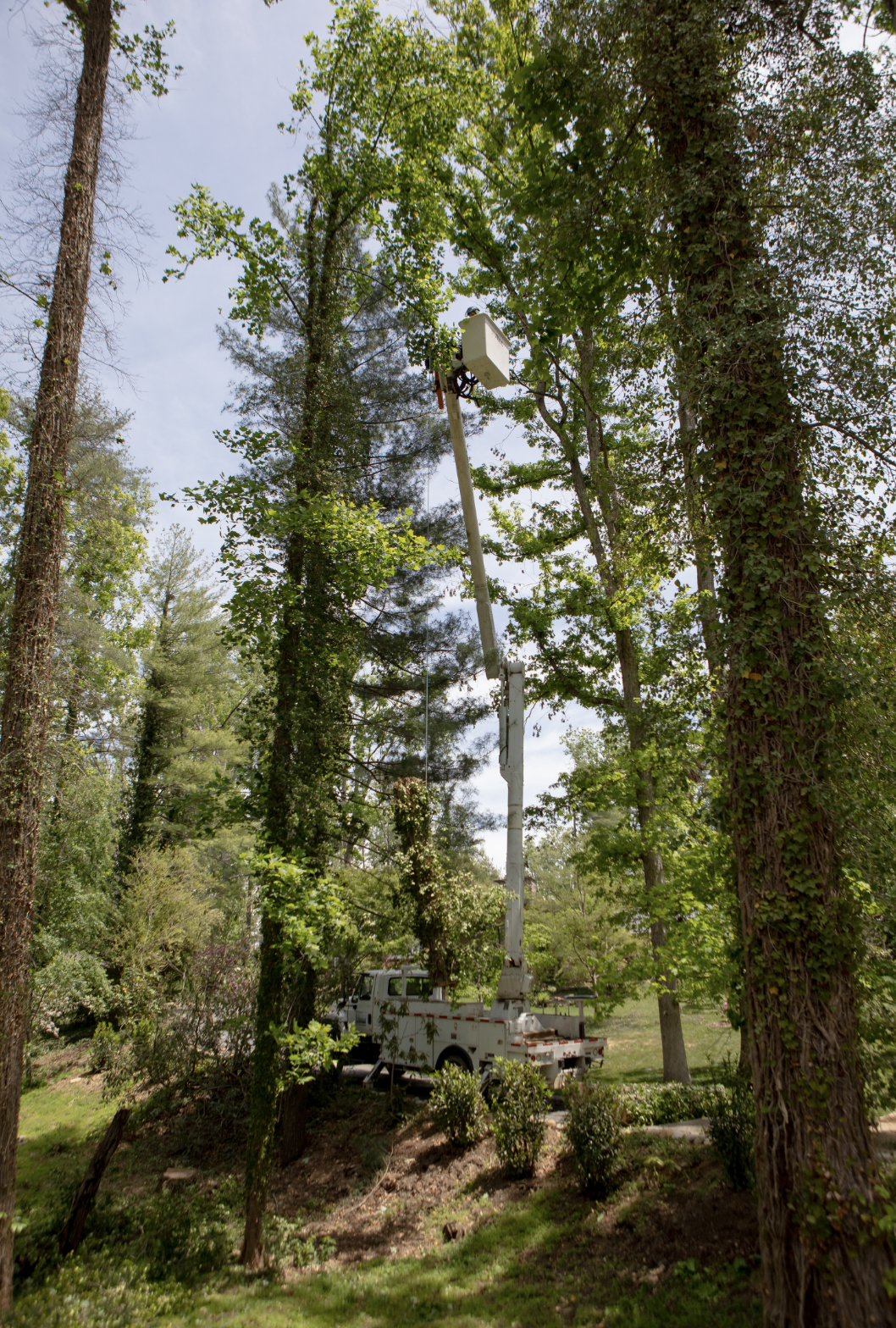
Canopy Reduction
Why Homeowners Trust Family Tree Care
ISA-Certified Arborists
Fully Licensed & Insured
Pruning based on individual tree growth patterns
Safety-first approach for mature & large trees
Complete debris cleanup
Locally Owned & Operated
Our Canopy Reduction Process
Canopy reduction improves structural balance, wind resistance, and safety while allowing trees to continue thriving in their environment. Because improper pruning can permanently harm a tree, this service requires careful planning and professional execution.
All work is performed to ANSI A300 standards and guided by ISA-Certified Arborists.
Onsite Evaluation
We begin with a detailed assessment of the tree’s size, species, structure, and surrounding environment. This allows us to determine whether canopy reduction is appropriate and identify areas where weight reduction will improve safety and stability.
Strategic Planning
Each reduction plan is customized to the tree and site conditions. We identify specific limbs for reduction, establish proper cut locations, and determine how much canopy can be safely reduced without compromising health or appearance.
Selective Reduction Pruning
Our arborists perform precise reduction cuts that shorten limbs while maintaining natural form and strong branch structure. This reduces sail effect, balances weight distribution, and improves clearance—without causing excessive stress or decay.
Cleanup & Review
Once pruning is complete, all debris is removed and the site is left clean. We review the work with you and provide guidance on future maintenance, growth management, and storm preparedness to support long-term tree health.
Ready To Get Started?
The first step is to get in touch!
Common Questions About Canopy Reduction
-
Canopy reduction is a professional pruning technique that reduces the size and weight of a tree’s canopy while maintaining its natural structure and health. It is commonly used when a tree has overextended limbs or poses increased risk due to size or location.
-
Canopy reduction uses selective reduction cuts to shorten branches properly, while topping removes large portions of the canopy indiscriminately. Topping damages trees, leads to weak regrowth, and increases long-term risk, whereas canopy reduction follows arborist standards.
-
Canopy reduction is often recommended when a tree needs improved clearance, reduced wind resistance, or weight reduction to lower the risk of failure. In Asheville and surrounding mountain areas, it’s frequently used as part of storm-risk management.
-
Yes, when performed by a certified arborist. Proper canopy reduction reduces stress on major limbs and improves structural balance without compromising tree health or appearance.
-
The amount varies by species, age, and condition. Arborists follow industry guidelines to ensure reductions stay within safe limits and do not overstress the tree.
-
When done correctly, canopy reduction preserves the tree’s natural form. The goal is a balanced, healthy appearance—not a visibly cut-back or unnatural shape.
-
Yes. By reducing canopy weight and wind resistance, canopy reduction can lower the likelihood of limb failure during storms—an important benefit in Western North Carolina’s weather conditions.
-
Most trees only need canopy reduction periodically. Growth rate, site conditions, and ongoing inspections help determine if and when future reductions are necessary.