
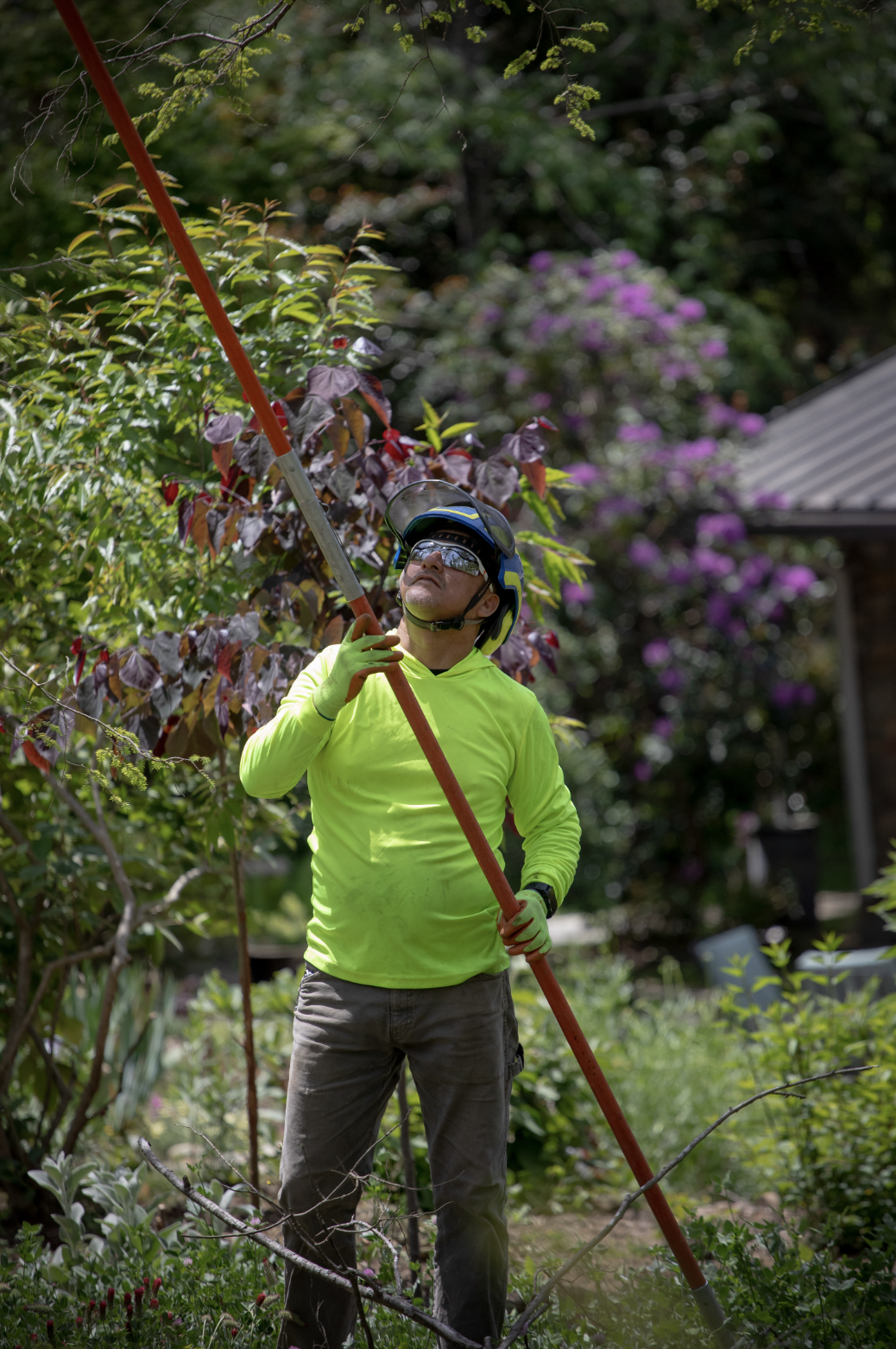
Deadwooding is a targeted pruning service focused on removing dead, dying, or non-viable branches to improve tree safety and health. Family Tree Care provides professional deadwooding services in Asheville and throughout Western North Carolina, helping property owners reduce hazards, protect structures, and maintain healthy, attractive trees.
Dead branches pose a serious risk—especially during storms or high winds—and can also harbor pests or disease. Removing this material promptly improves structural safety while allowing the tree to direct energy toward healthy growth.
Expert Deadwooding in the Asheville Community
Why Homeowners Trust Family Tree Care
ISA-Certified Arborists
Fully Licensed & Insured
Pruning based on individual tree growth patterns
Safety-first approach for mature & large trees
Complete debris cleanup
Locally Owned & Operated
Deadwooding improves tree safety, appearance, and overall vitality by eliminating compromised limbs before they fail. When performed correctly, it reduces risk without stressing the tree or altering its natural form.
All deadwooding is performed by trained professionals following ANSI A300 pruning standards.
Our Deadwooding Process
Onsite Evaluation
We begin with a careful inspection of the tree to identify dead, dying, or structurally unsound limbs. This evaluation also helps determine whether additional pruning or tree health services may be beneficial.
Strategic Planning
Each tree is approached individually. We determine which branches should be removed to reduce risk while preserving canopy balance and minimizing unnecessary cuts.
Precision Removal
Our crew removes dead wood using proper pruning techniques that prevent tearing, decay, or damage to surrounding branches. Work is performed safely and efficiently, even in challenging locations near homes, walkways, or utilities.
Cleanup & Review
After deadwooding is complete, all debris is cleared from the site. We review the results with you and provide recommendations for ongoing pruning, monitoring, or preventative care to help maintain tree health moving forward.
Ready To Get Started?
The first step is to get in touch!
Common Questions About Deadwooding
-
Deadwooding is the selective removal of dead, dying, or non-viable branches from a tree. This improves safety, reduces the risk of falling limbs, and allows the tree to focus energy on healthy growth.
-
Dead branches are unpredictable and can fail without warning—especially during storms or high winds. Removing them reduces the risk of property damage or injury, which is particularly important in residential areas and high-traffic spaces.
-
No. When performed correctly, deadwooding benefits the tree by removing non-functional material. Because dead limbs no longer contribute to growth, their removal does not stress the tree when proper pruning techniques are used.
-
Signs include brittle or leafless branches, peeling bark, fungal growth, or limbs that no longer produce foliage during the growing season. An arborist inspection can identify dead wood that isn’t obvious from the ground.
-
Frequency depends on the tree species, age, and environment. In Asheville and surrounding areas, many trees benefit from periodic inspections and deadwooding as part of routine maintenance.
-
Yes. Deadwooding focuses specifically on removing dead material, while trimming or pruning may address structure, clearance, or growth management. Deadwooding is often performed alongside other pruning services.
-
Yes. Removing dead limbs significantly reduces the likelihood of branch failure during storms, helping protect homes, vehicles, and people.
-
Yes. All removed branches and debris are fully cleaned up, leaving your property safe, neat, and ready to enjoy.