

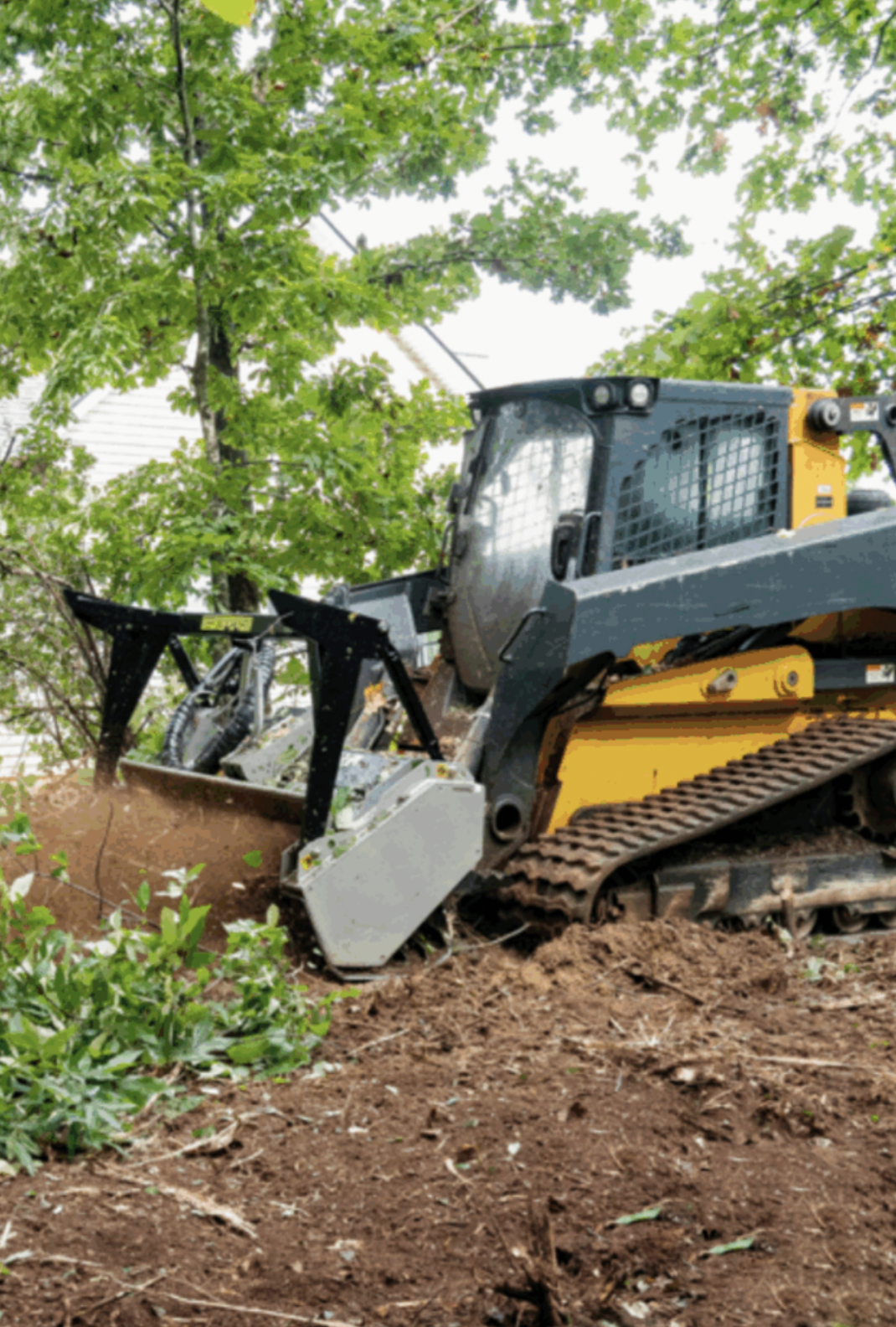
Expert Forestry Mulching
Forestry mulching is an efficient, environmentally responsible way to clear overgrown land without the disruption of traditional clearing methods. Family Tree Care provides professional forestry mulching services in Asheville and throughout Western North Carolina, helping property owners reclaim land, manage vegetation, and improve accessibility while preserving soil health and natural ecosystems.
Why Homeowners Trust Family Tree Care
ISA-Certified Arborists
Fully Licensed & Insured
Pruning based on individual tree growth patterns
Safety-first approach for mature & large trees
Complete debris cleanup
Locally Owned & Operated
Forestry mulching plays a critical role in land management, fire mitigation, erosion control, and property improvement. By converting unwanted vegetation into organic ground cover, mulching protects the soil, reduces runoff, and promotes long-term land health. Our approach is strategic and precise—focused on achieving your goals while respecting the land and surrounding environment.
Whether you’re preparing a site for construction, maintaining trails, clearing fence lines, or controlling invasive species, our process ensures effective results without unnecessary disturbance.
Our Forestry Mulching Process
Onsite Evaluation
We begin with a thorough evaluation of your property, assessing terrain, vegetation density, soil conditions, and access points. This allows us to determine the best equipment and approach while identifying areas that need selective clearing versus full mulching.
Strategic Planning
Every property is different. We develop a mulching plan tailored to your goals—whether that’s improving sightlines, restoring overgrown acreage, maintaining wooded trails, reducing wildfire risk, or managing invasive plants. Our planning prioritizes efficiency, safety, and environmental responsibility.
Precise Mulching
Our experienced operators use modern forestry mulchers to selectively clear unwanted vegetation and reduce it to a natural mulch layer. We control depth and coverage to protect desirable trees, minimize soil disturbance, and leave the land stable and usable—not stripped or damaged.
Cleanup & Review
Because forestry mulching processes material on site, there’s no hauling or debris removal required. Once complete, we walk the property with you to review results, ensure expectations were met, and discuss ongoing land management or maintenance options if needed.
Ready To Get Started?
The first step is to get in touch!
Common Questions About Forestry Mulching
-
Forestry mulching is a land-clearing method that uses a specialized mulcher to cut, grind, and shred trees, brush, and undergrowth in one pass. The machine turns vegetation into organic mulch that stays on the site, eliminating the need for hauling debris and reducing soil disturbance.
-
sheville and the surrounding Western North Carolina mountains have steep slopes, erosion risk, and heavy undergrowth. Forestry mulching leaves a protective mulch layer that prevents erosion, retains moisture, and promotes soil health, making it especially suited for this region’s rain-prone, rugged landscape.
-
Costs vary with acreage, vegetation density, and terrain. Near Asheville, you may see $2,500–$4,000+ for small to medium sites, with larger acreages increasing accordingly. Dense vegetation or steep slopes can raise prices due to slower production.
-
Forestry mulching is faster and often more cost-effective because it combines cutting and cleanup in one step. It leaves nutrient-rich mulch behind, helps control erosion, improves soil fertility, suppresses weeds, and avoids burning, hauling, or piling debris.
-
Yes. By eliminating dense brush, ladder fuels, and understory buildup, mulching can reduce fuel loads around homes and properties, improving defensible space and lowering wildfire risk in fire-prone forested areas.
-
The shredded material stays on site as a natural mulch layer that slowly decomposes, returning nutrients to the soil, reducing erosion, retaining moisture, and suppressing invasive weeds. It essentially acts like nature’s own ground cover.
-
Most forestry mulching operations do not require extensive permitting because they cause minimal soil disturbance and leave vegetation onsite rather than burning or hauling it off. However, clearing near streams or regulated wetlands may trigger additional erosion control requirements under state forestry BMPs. Always check with Buncombe County or the NC Forest Service for site-specific requirements.
-
Production rates depend on vegetation density, terrain, and machine size. On average, a professional forestry mulcher can clear about 1–3 acres per day under typical conditions, though dense underbrush or steep slopes may slow the process.