
Effective pest management is essential to protecting the health, appearance, and longevity of trees and shrubs. Family Tree Care provides professional tree and plant pest management services in Asheville and throughout Western North Carolina, helping property owners identify, control, and prevent damaging insects before they cause irreversible harm.
Insects and pests often go unnoticed until decline is visible, at which point damage can be severe. Our approach focuses on early detection, accurate diagnosis, and targeted treatment—preserving plant health while minimizing unnecessary chemical use.
Expert Pest Management in the Asheville Area
Why Homeowners Trust Family Tree Care
ISA-Certified Arborists
Fully Licensed & Insured
Pruning based on individual tree growth patterns
Safety-first approach for mature & large trees
Complete debris cleanup
Locally Owned & Operated
Professional pest management improves plant vitality, canopy health, and resistance to disease and stress. Because not all insects are harmful, proper identification and timing are critical to effective treatment.
Our arborists use integrated pest management (IPM) principles to control damaging pests while protecting beneficial insects and the surrounding environment.
Our Pest Management Process
Onsite Evaluation
We begin with a detailed inspection of affected trees and shrubs, looking for signs of insect activity such as leaf damage, dieback, discoloration, bore holes, or sap flow. Proper diagnosis ensures we treat the cause of the problem—not just the symptoms.
Strategic Planning
Based on the pest species, life cycle, severity, and seasonal timing, we develop a customized management plan. This may include cultural adjustments, targeted treatments, or preventative measures designed to reduce future infestations.
Targeted Treatment
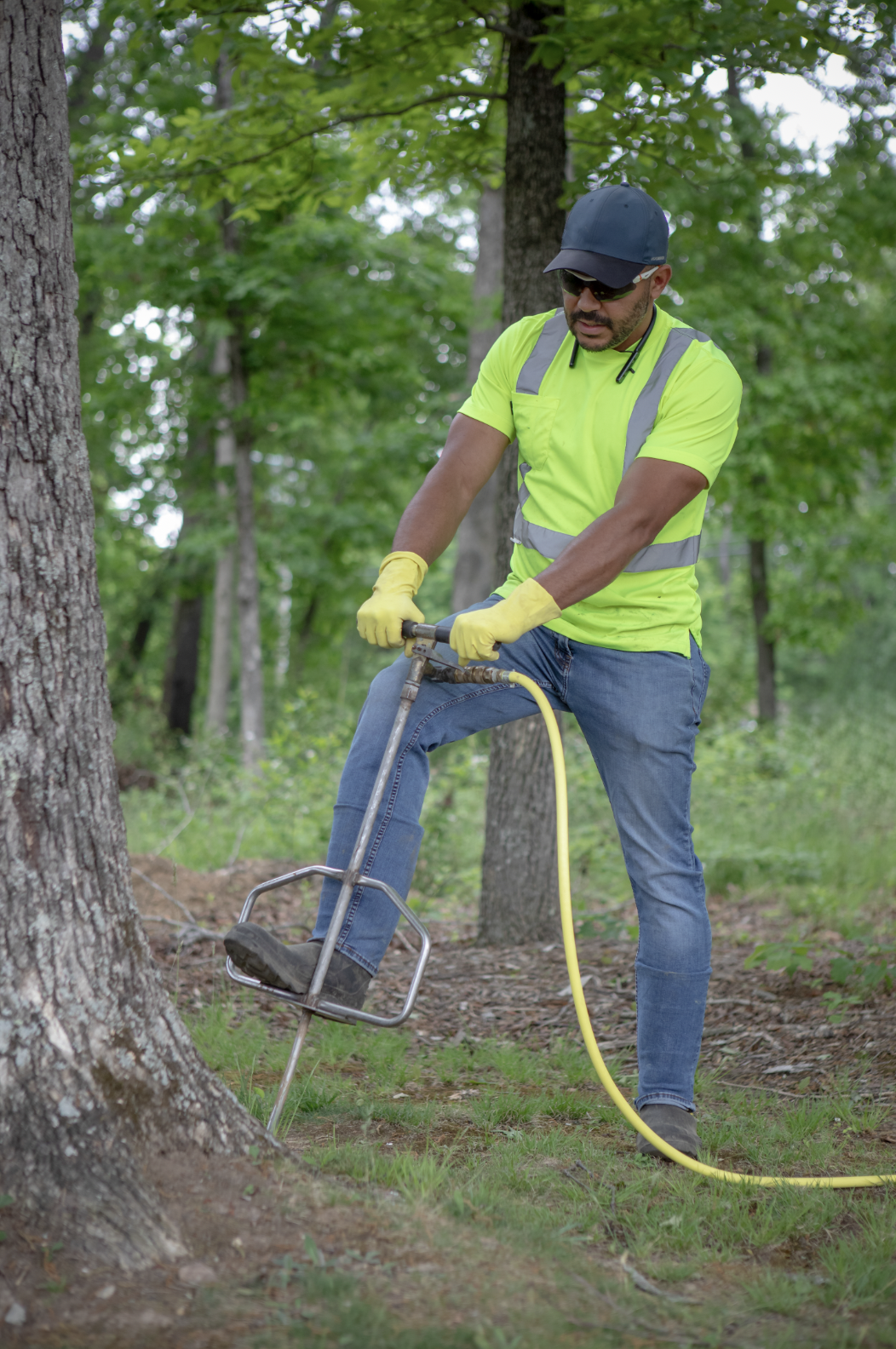
When treatment is necessary, we use precise application methods such as trunk injection, soil treatment, or targeted foliar application. These techniques allow us to control pests effectively while minimizing exposure to non-target plants, pollinators, and surrounding areas.
Monitoring & Preventative Guidance
After treatment, we review what to expect and provide guidance on monitoring and long-term prevention. For many properties, ongoing pest management is the most effective way to protect valuable trees from recurring or emerging threats.
Ready To Get Started?
The first step is to get in touch!
Common Questions About Pest Management
-
Professional pest management focuses on identifying and controlling insects and pests that damage trees and shrubs while protecting beneficial organisms. Treatments are based on accurate diagnosis, timing, and targeted application rather than blanket spraying.
-
Common signs include leaf discoloration, defoliation, dieback, holes in bark, sap flow, or unusual insect activity. In many cases, damage progresses before pests are noticed, which is why professional inspections are important.
-
No. Many insects are beneficial or harmless. Integrated pest management (IPM) focuses on treating only damaging species while preserving beneficial insects and maintaining a balanced ecosystem.
-
In Asheville and surrounding areas, common tree pests include borers, scale insects, aphids, mites, caterpillars, and beetles. Correct identification is essential, as treatment varies by species and life cycle.
-
Depending on the situation, treatments may include trunk injection, soil application, or targeted foliar treatments. These methods allow precise control while minimizing exposure to non-target plants and surrounding areas.
-
When performed by trained professionals using proper products and methods, pest management is safe and responsible. Treatments are selected and timed to reduce impact on pollinators and nearby wildlife whenever possible.
-
Some infestations can be resolved with a single treatment, while others benefit from monitoring or seasonal preventative care. Ongoing management often provides the best protection for valuable trees.
-
Yes. Pest management is often part of a broader tree health care plan that may include fertilization, pruning, or soil improvement to improve overall resilience and reduce future pest pressure.